
About MERV 13 Furnace Filters
MERV 13 Furnace Filters
If indoor air quality is a major concern in your home, MERV 13 furnace filters are one of the higher-efficiency filtration options many homeowners consider when standard residential filters no longer feel sufficient.
Compared to lower-rated furnace filters, MERV 13 filtration is designed to capture a significantly higher percentage of smaller airborne particles, which is one reason these filters are commonly used in homes dealing with smoke exposure, severe allergies, respiratory sensitivities, wildfire conditions, or higher outdoor pollution levels.
From a filtration standpoint, MERV 13 filters are capable of capturing finer airborne particulates like smoke residue, microscopic allergens, fine dust, mold spores, pet dander, and other smaller airborne pollutants that lower-efficiency residential filters may not trap as effectively.
However, stronger filtration always comes with an important tradeoff: airflow resistance.
As filtration efficiency increases, resistance across the filter media generally increases as well. That means MERV 13 furnace filters tend to perform best in HVAC systems designed to support higher-efficiency filtration, particularly systems using deeper media cabinets, properly sized return ductwork, and stable blower performance.
The goal is not simply installing the highest-MERV filter available. The goal is improving indoor air quality without creating excessive static pressure conditions or unnecessary strain on the heating and cooling system over time.
Popular MERV 13 furnace filter options include:
- Lennox Healthy Climate 20x20x5 MERV 13 Furnace Filter
- Aprilaire 413 Carbon MERV 13 Odor Reduction Filter
- Honeywell FC200E1037 20x25x4 MERV 13 Furnace Filter
Is a MERV 13 Filter Too Restrictive?
It really just depends heavily on the HVAC system itself.
This is one of the biggest misconceptions homeowners run into with high-efficiency furnace filters. Many people assume the highest MERV rating automatically equals the “best” filtration, but airflow capability and overall HVAC system design matter just as much as particle capture efficiency.
MERV 13 filters use denser filtration media than lower-rated residential filters, which means the blower system must work against higher resistance conditions as return air moves through the filter. In properly designed HVAC systems, that usually is not a problem. In systems that already struggle with airflow, however, aggressive filtration can sometimes contribute to elevated static pressure conditions over time.
That is where problems can begin showing up.
Older HVAC systems with undersized return ductwork, restrictive 1-inch filter racks, neglected maintenance, weaker blower performance, or already marginal airflow conditions may have difficulty supporting high-efficiency filtration consistently. In some cases, homeowners may notice reduced air circulation, uneven room temperatures, longer blower runtime, or additional strain on the heating and cooling equipment.
Newer residential HVAC systems generally handle MERV 13 filtration much more effectively, especially systems designed around deeper 4-inch or 5-inch media cabinets. The increased filtration surface area inside deeper media filters helps distribute airflow and airborne debris more evenly across the filter media, which often allows the system to maintain more stable pressure conditions over longer operating periods.
The goal is not simply installing the most aggressive filtration possible. The goal is improving indoor air quality while still maintaining healthy long-term HVAC system performance.
Who Should Consider a MERV 13 Furnace Filter?
MERV 13 furnace filters are typically chosen by homeowners with elevated indoor air quality concerns or situations where standard residential filtration may not provide enough fine-particle capture.
In many homes, MERV 8 or MERV 11 filtration provides an excellent balance between airflow stability and everyday air quality improvement. However, homeowners dealing with more advanced air quality concerns sometimes prefer higher-efficiency filtration capable of capturing a greater percentage of smaller airborne particulates.
MERV 13 filtration is especially popular in homes affected by severe allergies, asthma concerns, wildfire smoke exposure, higher outdoor pollution levels, smoke-related particles, or environments where indoor air cleanliness is a major priority.
This became especially common in many areas following major wildfire seasons and growing concerns surrounding airborne particulate exposure indoors. In homes where smoke haze, fine dust, or respiratory irritation becomes a recurring issue, higher-efficiency residential filtration may help reduce the amount of airborne particulate continuously recirculating through the HVAC system.
Some activated carbon MERV 13 filters are also designed to help reduce certain odors and smoke-related particles in addition to standard particulate filtration. While carbon media does not function like a dedicated whole-home air purifier, it may help improve overall indoor air quality conditions in homes dealing with lingering odors, cooking smoke, pets, or wildfire-related air quality issues.
Filter thickness also becomes much more important at higher MERV levels.
Many HVAC professionals prefer deeper 4-inch or 5-inch MERV 13 media filters whenever possible because the additional filtration surface area helps distribute airflow more evenly across the media pack. In many residential HVAC systems, deeper filters often maintain more stable pressure conditions and longer service life compared to thinner high-efficiency 1-inch filters operating under the same airflow conditions.
Common Questions About MERV 13 Furnace Filters
Is MERV 13 safe for residential HVAC systems?
For many modern residential HVAC systems, yes. However, HVAC system design matters significantly when using high-efficiency filtration.
MERV 13 filters create more resistance across the filtration media than lower-rated residential filters, which means systems with undersized return ductwork, restrictive filter racks, marginal blower performance, or already elevated static pressure conditions may struggle with aggressive filtration over time.
In many newer residential systems — especially systems designed around deeper media cabinets and stronger airflow capacity — MERV 13 filtration often operates very effectively when properly maintained.
Is MERV 13 good for allergies?
Yes. MERV 13 furnace filters are specifically designed to capture a greater percentage of smaller airborne particles compared to standard residential filters, making them a popular option for homes dealing with allergies, asthma concerns, smoke exposure, wildfire conditions, and elevated indoor air quality demands.
Because these filters target finer airborne particulates like pollen, pet dander, smoke residue, mold spores, and microscopic dust particles more effectively, many homeowners notice a meaningful improvement in overall indoor air cleanliness when the HVAC system is capable of supporting higher-efficiency filtration properly.
How often should you replace a MERV 13 furnace filter?
In many residential HVAC applications, MERV 13 furnace filters are typically replaced every 60–90 days. However, replacement intervals vary significantly depending on pets, smoke exposure, household dust levels, HVAC runtime, outdoor air quality conditions, and overall particulate load inside the home.
Homes exposed to wildfire smoke, construction debris, heavy pet dander, or continuous HVAC operation often require more frequent filter inspection and replacement because higher-efficiency filtration media can load with airborne particulates much faster under heavier operating conditions.
Are 4-inch and 5-inch MERV 13 filters better than 1-inch filters?
In many HVAC applications, yes.
Deeper 4-inch and 5-inch MERV 13 media filters contain substantially more filtration surface area than thinner 1-inch high-efficiency filters. That additional media depth allows airflow and airborne debris to distribute more evenly across the filter media, which often helps maintain more stable pressure conditions as the filter loads over time.
In residential HVAC systems designed to support media cabinets, thicker MERV 13 filters frequently provide longer service life, improved debris-holding capacity, and more stable long-term airflow performance compared to thinner high-MERV filtration setups.
-
Carrier & Bryant PGAPXXCAR1625 (2 Pack) - Performance/Preferred Air Purifier Filter 16" x 25" x 3.5" MERV 13
Regular price $245.24 USDRegular priceUnit price per -
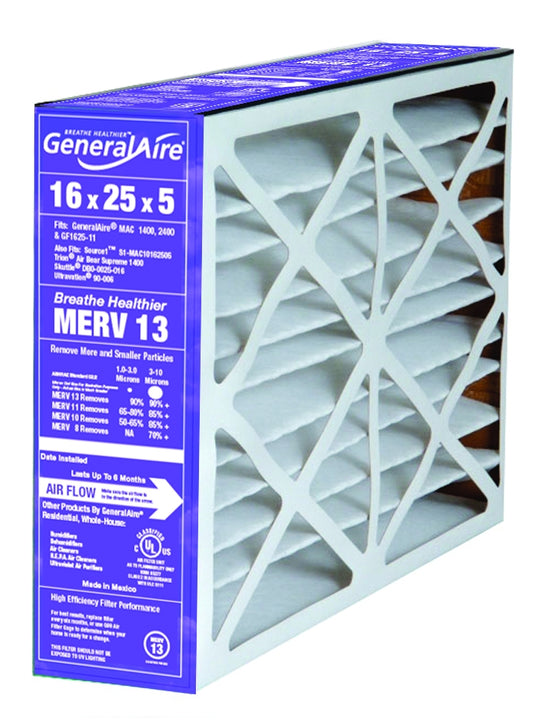
Generalaire 8FM1625 - 16" x 25" x 5" MERV 13 Filter for MAC 1400, 2400
Regular price $71.40 USDRegular priceUnit price per -
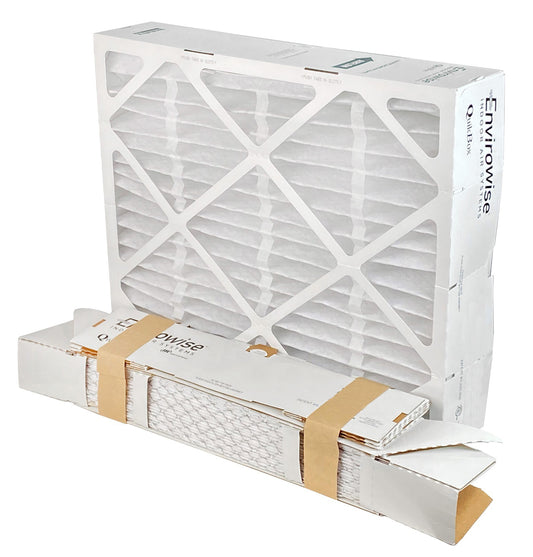
Trane FLRQB5FR24M13 - 23.7" x 26" x 4.7" Quikbox Filter Media 2-Pack, MERV 13
Regular price $88.59 USDRegular priceUnit price per -
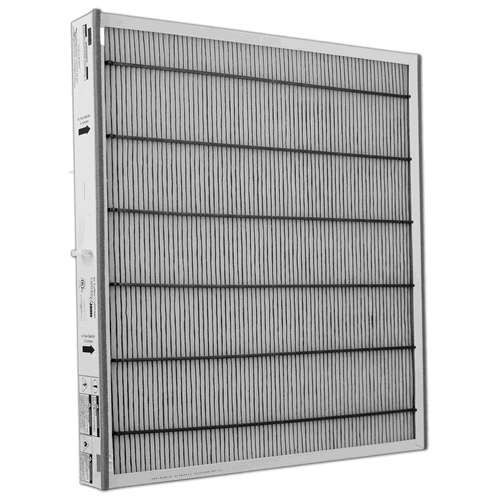
Carrier & Bryant PGAPXXCAR2420 - Performance/Preferred Air Purifier Filter 24" x 20" x 3" MERV 13
Regular price From $151.29 USDRegular priceUnit price per -
Carrier & Bryant PGAPXXCAR1620 (2 Pack) - Performance/Preferred Air Purifier Filter 16" x 20" x 3.5" MERV 13
Regular price $245.25 USDRegular priceUnit price per -
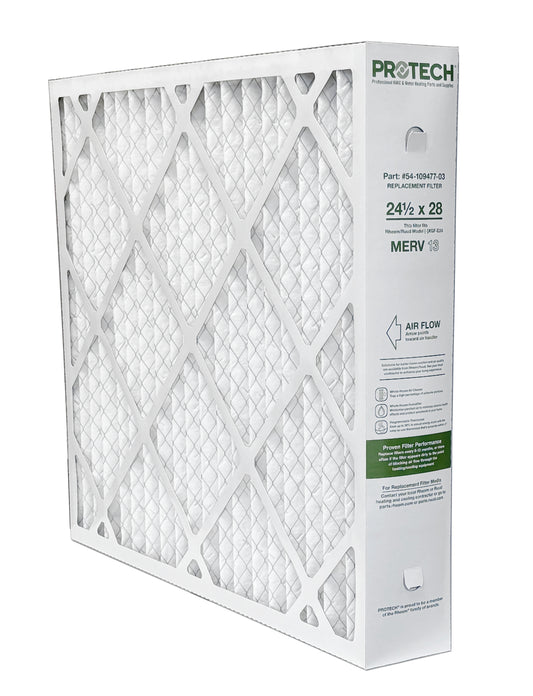
Rheem 54-109477-03 - 24.5" x 28" x 5" Exact-Fit Filter for Air Cleaner XGF-E24M13, MERV 13
Regular price From $60.20 USDRegular priceUnit price per -
AprilAire UK313 (Replaces 313) MERV 13 TriPure Filter with Upgrade Rails
Regular price From $68.15 USDRegular priceUnit price per -
AprilAire UK513 (Replaces 513) MERV 13 TriPure Filter with Upgrade Rails
Regular price From $99.37 USDRegular priceUnit price per -
AprilAire UK113 (Replaces 113) MERV 13 TriPure Filter with Upgrade Rails
Regular price From $67.75 USDRegular priceUnit price per -
AprilAire UK913 (Replaces 913) MERV 13 TriPure Filter with Upgrade Rails
Regular price From $74.11 USDRegular priceUnit price per -
Aprilaire 513CBN -Odor Reduction Air Filter For Aprilaire Whole-Home Air Purifiers, MERV 13, For Odors And Most Common Allergens
Regular price From $165.44 USDRegular priceUnit price per




Shop More Furnace Filters
-

Furnace Filters
Find the Right Furnace Filter for Your HVAC System The right furnace...
-

4-Inch Furnace Filters
4-Inch Furnace Filters 4-inch furnace filters provide a larger surface area for...
-

MERV 11 AIR FILTERS
MERV 11 Furnace Filters If you want stronger air filtration without immediately...


